How Does the 50/30/20 Rule Actually Work?
TL;DR
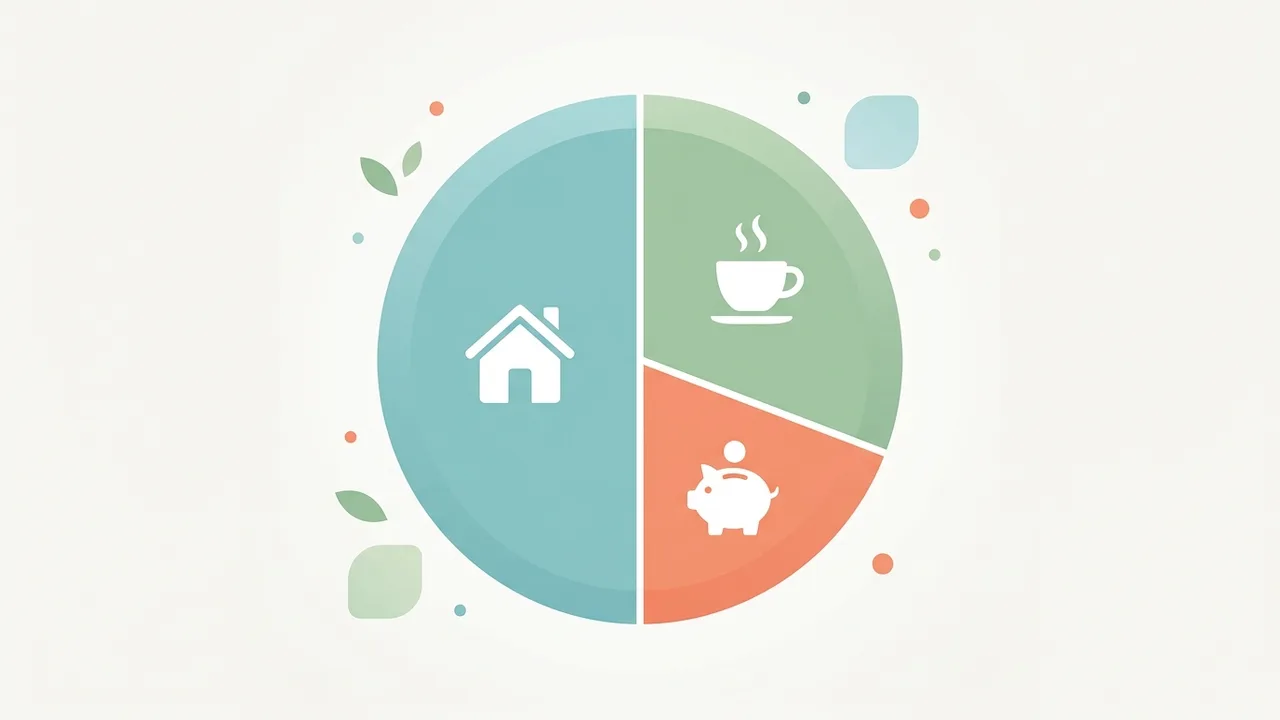
The 50/30/20 rule splits your net income into three buckets: 50% for needs, 30% for wants, and 20% for saving or paying off debt. It's simple, visual, and doesn't require a single spreadsheet. Even if the numbers don't line up perfectly for your situation, it's a solid starting point.
Table of Contents
- What is the 50/30/20 rule?
- How do you calculate the split?
- What goes in each category?
- What if the percentages don't match your life?
- 5 practical tips to get started
- FAQ
What Is the 50/30/20 Rule?
The 50/30/20 rule is a budgeting method that gained wide popularity through the book All Your Worth by Elizabeth Warren and Amelia Warren Tyagi. The idea is simple: divide your after-tax income into three categories.
It's not about tracking every cent. It's about having a clear, conscious picture of where your money actually goes — without building a 12-tab spreadsheet to do it.
The Consumer Financial Protection Bureau (CFPB) also references percentage-based budgeting as a practical entry point for people new to managing their finances.
How Do You Calculate the Split?
Step 1: Find your net monthly income — what lands in your account after taxes. If you receive regular benefits or tax credits, include those. They're real money you have available each month.
Example with a net income of €2,000/month:
| Category | Percentage | Monthly Amount |
|---|---|---|
| Needs & fixed expenses | 50% | €1,000 |
| Wants & discretionary spending | 30% | €600 |
| Saving & debt repayment | 20% | €400 |
At €1,500/month, the amounts become: €750 / €450 / €300.
Want to run the numbers for your own income? The free budget planner on Budgivy does the math for you — no formulas needed.
What Goes in Each Category?
50% — Needs (What You Can't Skip)
These are the expenses you can't easily cut without serious consequences.
- Rent or mortgage
- Utilities (electricity, gas, water)
- Groceries (the basics)
- Health insurance and out-of-pocket costs
- Transportation you genuinely need for work
- Essential subscriptions like internet
Worth knowing: NIBUD — the Dutch National Institute for Family Finance Information — recommends mapping out your fixed expenses before you focus on saving. You can find reference budgets at nibud.nl.
30% — Wants (What Makes Life Enjoyable)
This is everything that improves your quality of life but isn't strictly necessary.
- Dining out and takeout
- Streaming services (Netflix, Spotify, etc.)
- Clothing beyond the basics
- Hobbies and gym memberships
- Weekend trips
- Gifts
This category is also the first place to look when a month gets tight — you can pull back here without touching anything essential.
20% — Saving & Paying Off Debt
This is how you build financial breathing room over time.
- Emergency fund (goal: 3–6 months of fixed expenses)
- Saving for a specific goal (vacation, laptop, car)
- Extra payments on loans or credit card balances
- Retirement contributions
Building a savings plan doesn't have to be complicated. Start with one small, fixed amount per month — consistency matters more than the size.
What If the Percentages Don't Match Your Life?
Honest answer: for a lot of people, they won't — at least not right away.
In high-cost cities, rent alone can eat up 40–50% of take-home pay. That leaves very little room for both wants and saving at the same time.
That's not failure. That's just reality.
The 50/30/20 rule is a guideline, not a rule carved in stone. Adjust it to fit:
- High fixed costs? Try 60/20/20 instead.
- Trying to pay off debt fast? Consider a temporary 50/10/40 split.
- Very tight budget? Even setting aside €10 a month is real progress.
Use the method as a starting framework — not a measuring stick to judge yourself against.
Tracking your monthly budget gives you a quick, honest look at what your current split actually looks like.
5 Practical Tips to Get Started
1. List your fixed expenses first Write down every recurring monthly cost. That's your real 50% baseline — and it usually looks different than you'd expect.
2. Use separate accounts or a budget app Three digital "envelopes" — one per category — make it much easier to stay on track. No spreadsheet required.
3. Automate your savings transfer on payday Move your savings amount the same day you get paid. What you don't see, you don't spend. Even €25/month adds up to €300 a year.
4. Check your 30% category monthly This is where small purchases quietly pile up. A quick monthly review keeps things honest.
5. Use a visual tool A dashboard that shows your spending at a glance works better than a spreadsheet you never open. The household budget tracker in Budgivy shows your 50/30/20 split in real time — no setup headache.
FAQ
What exactly is the 50/30/20 rule?
The 50/30/20 rule is a budgeting method where you split your net income into three categories: 50% for needs and fixed expenses, 30% for wants and discretionary spending, and 20% for saving or paying off debt.
How do I calculate my net income for the 50/30/20 rule?
Use your take-home pay — the amount that hits your bank account each month after taxes. If you receive regular benefits or tax credits, you can include those too, since they're part of what you actually have to spend.
What counts as a 'need' in the 50% category?
Rent or mortgage, utilities, groceries (basics), health insurance, transportation you need for work, and any subscriptions you can't easily cancel. Essentially: everything you need to keep your life running.
What if my fixed expenses already exceed 50%?
That's the reality for a lot of people, especially in high-cost cities. Adjust the percentages to fit your situation — treat the rule as a guide, not a strict formula. Look for small wins like cutting unused subscriptions or reducing energy costs.
Does the 50/30/20 rule work on a low income or benefits?
Yes. The method works at any income level. The ratios may shift when money is tight, but the core idea stays the same: make conscious choices about where your money goes. Even setting aside €10 a month is a meaningful start.
Can my partner and I use the 50/30/20 rule together?
Absolutely. You can apply the rule to your combined net income or run two separate budgets side by side. Budgivy supports shared budgeting through collaborative dashboards and permission settings for partners.
Try It Yourself in Budgivy
The 50/30/20 rule works best when you don't have to do the math in your head. Budgivy translates your income into a clear visual split — no spreadsheet, no setup, no stress.
No credit card. No Excel. Just a clear picture of your money.
Create your first budget for free — no hassle, no spreadsheet.